The recognition of qualifications enhances the right to access to education since it may give the opportunity to individuals to begin or continue studies in higher education. Holders of a qualification have the right to an assessment of their qualification. It facilitates the academic mobility, the exchange between higher education institutions, enhances the quality assurance of study programmes and the quality and reliability of qualifications, which are recognised by the competent authority of a foreign country.
About Me
- WERI FOUNDATION
- Ensure inclusive and equitable quality education and promote lifelong learning opportunities for all
Mr.Vladimir Putin Vladimirovich is the Prime Minister of the Russian Federation
Uploads by WERICAMPAIGN
Followers
BBC News - Science & Environment
2021-01-23
Trust in quality
Recognition of qualification represents a trust in quality. Good structures for quality assurance of education are crucial for enabling trust in a qualification. Quality Education assurance mechanisms provide a solid basis for competent authorities to recognize the qualifications awarded by foreign higher education institutions. In this sense, quality assurance provides a foundation upon which trust can be built and from which recognition is possible.
Contribute to quality of education institutions
There is also a great number of ways in which recognition in itself can contribute to the quality of educational institutions. First, recognition is a prerequisite for mobility and internationalisation of research and studies. The circulation of researchers and students helps to spread new perspectives and ideas between education systems, and this aids in safeguarding the quality and relevance of teaching and research. Recognition is also a prerequisite for attracting international talent to higher education systems. Secondly, the establishment of structures for the recognition of qualifications and prior learning help the education institutions conceptualise what it means for a student to be ready and prepared for studies and research. Structures for recognition help to secure quality in admission of students. Thirdly, there is an inherent social commitment in recognition, enhancing the cultural and social significance of higher education systems in line with the United Nations’ Sustainable Development Goal 4. Good recognition practice is an important factor in creating a fair and just system for qualifications.
Promoting international understanding of higher education systems
The ability and capacity of an education institution to recognize and understand qualifications and learning outcomes from other institutions and the quality assurance that supports them, reflects the institution’s ability to understand the quality and quality assurance processes of its own qualifications.
2011-05-09
Выступление на параде, посвящённом 66-летию Победы
8 мая 11:15
Председатель Правительства Российской Федерации В.В.Путин направил главам правительств стран СНГ – Азербайджана, Армении, Белоруссии, Казахстана, Киргизии, Молдавии, Таджикистана, Туркменистана, Узбекистана, Украины, а также Абхазии и Южной Осетии поздравительные послания по случаю Дня Победы
2011-05-08
2011-05-06
President Proclaims Military Spouse Appreciation Day, U.S. Department of Defense
Military Spouse Day was first celebrated in 1984 when then-President Ronald Reagan proclaimed the observance to honor the contributions of military spouses. The military now sets aside the Friday before Mother's Day each year to pay tribute to the spouses who play a vital role in the nation's defense.
President Proclaims Military Spouse Appreciation Day, U.S. Department of Defense
2011-05-05
2011-05-04
About World Environment Day - United Nations Environment Programme
2011-05-03
Ban urges world to recall terrorism's victims in wake of Osama bin Laden...
Ban urges world to recall terrorism's victims in wake of Osama bin Laden's death
United Nations, New York, 2 May 2011 -- The death of Osama bin Laden,
Promoting Justice and Security - OROLSI Promotional Film 2011
unitednations | 27 avr 2011
The Department of Peacekeeping Operations puts a special emphasis on promoting rule of law and security in post-conflict situations. This film describes how the Office of Rule of Law and Security Institutions inside of the Department works to support this work in UN missions around the world.
Millennium Promise - MDG Toolkit
The Millennium Development Goals (MDGs) are the world's shared development agenda to reduce extreme poverty, hunger and preventable disease. Efforts to achieve the Goals have yielded many successes, yet urgent action still remains if we are to achieve them by the 2015 deadline.
It is critical to understand that government leaders cannot solve global challenges on their own any more. In today's much flatter world, it is everyday people – and, critically, their personal networks – who have the potential to be the world's big new problem solvers. Post-disaster emergency responses in recent months have vividly displayed the need for coordinated best efforts from non-profits, companies, individuals, online communities, governments and the UN system. The same mindset of partnership, urgency, and "all hands on deck" is also required to achieve the Millennium Development Goals, the world's integrated targets for tackling extreme poverty by 2015.Millennium Development Goals must be met
World Press Freedom Day 2011
2011-04-29
Protecting the world’s plant resources from pests
Who we are
Livestock, Environment and Development: LEAD Home
The LEAD (Livestock, Environment and Development) initiative is an inter-institutional consortium with the secretariat located within FAO. The work of the initiative targets the protection and enhancement of natural resources affected by livestock production while at the same time alleviating poverty.
The work of the LEAD initiative focuses on the close and complex interactions between government policies and the environmental impact of livestock production. Its scope is to support the formulation and implementation of effective policy frameworks, at local, national and global levels.
To this effect, LEAD conducts analysis and maintains databases to monitor and estimate the consequences of livestock sector’s growth and structural changes. It also identifies technologies to mitigate the negative effects and maximise the positive effects of different modes of production, and assesses ways to enhance their development and adoption.
From 2000 to 2007, LEAD operated as an FAO project supported by the World Bank, the European Union (EU), the Ministère des Affaires Etrangères (France), German Federal Ministry for Economic Cooperation and Development via GTZ (Germany), the Department for International Development (United Kingdom), the US Agency for International Development (USA), the International Development Agency (Denmark), the Swiss Agency for Development and Cooperation (Switzerland) and the Food and Agriculture Organization of the United Nations (FAO).
Livestock, Environment and Development: LEAD Home
2011-04-27
Defense.gov News Article: Military, Afghan Leaders Mark Orphanage Opening
Military, Afghan Leaders Mark Orphanage OpeningBy Karen Parrish SHARAN, Afghanistan, April 26, 2011 – “Safe haven” took on new meaning yesterday as hundreds of Afghans gathered to open an orphanage here in Paktika province’s capital. |
2011-04-25
Миссия: Официальный сайт Министерства Образования и Науки РФ
Министерство образования и науки Российской Федерации (Минобрнауки России) было образовано 9 марта 2004 года Указом Президента Российской Федерации N 314.
Минобрнауки России является федеральным органом исполнительной власти, осуществляющим функции по выработке государственной политики и нормативно-правовому регулированию в сфере образования, научной, научно-технической и инновационной деятельности, нанотехнологий, интеллектуальной собственности, а также в сфере воспитания, социальной поддержки и социальной защиты обучающихся и воспитанников образовательных учреждений.
Деятельность Министерства - его миссия - направлена на реализацию и развитие интеллектуального потенциала нации - главной составляющей устойчивого и динамичного развития России.
State of the Planet
Columbia University, New York - Jeffrey D. Sachs
Earth Institute : Research and Press Releases
Medicine and Health
Agriculture
Cleantech
BioTechnology
Water Technology
HiTech
Israel 21c Technology Feeds
Israel the State - History
Israel the State - Speeches and Interviews
Israel the State - Aid to Gaza
Israel the State - The Iranian Threat
Israel the State - Peace Process
Israel the State - Hamas & Gaza
Babylon and Beyond
Israel Experience - Coexistence
Israel Experience - Humantiarian Aid
Israel Experience - Art/Fashion
Israel Experience - Israel - Diaspora
Israel Experience - Lifestyle
Israel Experience - Travel & Tourism
The Israel Experience : Nature/wildlife
Etymological Dictionary of Grasses
Five Kingdoms A Multimedia Guide to the Phyla of Life on Earth
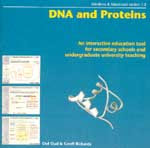
An Interactive Education Tool for Secondary Schools and Undergraduate University Teaching
Mutations - Mutations - changes to the gene make-up of an organism - are hugely important. They are responsible for all the genetic variation in humans and other species thus allowing evolutionary changes to take place. Mutations is a comprehensive program in which the types, origins and consequences of both gene (DNA) and chromosome mutations are introduced.
Arthropods of Economic Importance Diaspididae of the World
Yeasts of the World Morphology, physiology, sequences and identification
Yeasts are not only essential for the production of bread, beer and wine, but also play a major role in many more modern industrial processes, such as the production of enzymes, pigments, antioxydants etc. Moreover many yeasts are important as human pathogens, or as spoilage organisms in the food industry.
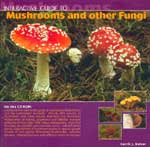
Interactive Guide to Mushrooms and other Fungi
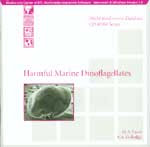
Harmful Marine Dinoflagellates
This treatise represents a comprehensive, up-to-date multifunctional dinoflagellate identification database featuring information on 69 species of harmful marine dinoflagellates and associated species present in the world's oceans. This database includes 44 toxin-producing species, brevetoxins, saxitoxins and ciguatoxins, and seven nuisance species that produce 'red tides' often resulting in massive sea life mortalities. In addition to the species description, information is available on the morphology, reproduction, ecology, toxicity, and habitat and locality for each species. A comprehensive glossary of more than 120 related scientific terms, and an extensive literature reference collection containing about 500 citations is included. There are nearly 600 figures illustrating every species via scanning electron micrographs (60%), light micrographs 120%), and/or line drawings (20%). The matrix-based identification key allows for multiple entry of characters to facilitate fast and effective diagnosis of a given species.
Fishes of the North-eastern Atlantic and the Mediterranean
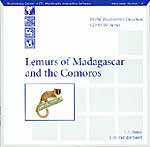
Lemurs of Madagascar and the Comoros
DNA and Proteins
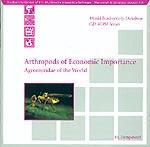
Arthropods of Economic Importance Agromyzidae of the World
The Agromyzidae (mining flies) are a highly diverse dipteran family of exclusively phytophagous species. The world fauna consists of about 2,750 species. Of these, some 110 species are known to occur on cultivated crops. A number of species are of particular importance, especially Liriomyza and Ophiomya.

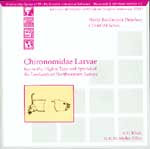
Chironomidae Larvae Key to the Higher Taxa and Species of the Lowlands of Northwestern Europe
The Chironomidae form a cosmopolitan family of small nematocerous flies represented by some 1,300 species in the West Palaearctic Region. Chironomid larvae are widely distributed and the vast majority have aquatic juvenile stages which, on average, comprise one third of the invertebrate species in freshwater habitats. This usual abundance, and the fact that a number of species are pollution-tolerant, make chironomidae ideal indicator species in monitoring the quality of surface waters.
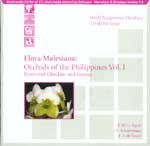
Flora Malesiana: Orchids of the Philippines Volume 1
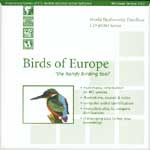
Birds of Europe 'The handy birding tool'
Compiled by European ornithologists, Birds of Europe is a comprehensive source of information on 447 bird species. Detailed descriptions, full colour illustrations, sound recordings of birdcalls, pictures of eggs, video clips, and interactive maps depicting the summer, year-round and winter distribution.