Rim of the Pacific (RIMPAC) is the world's largest multi-national maritime exercise, and is scheduled to take place near Hawaii from June 23 to August 1, 2010.
The in port phase of RIMPAC 2010 set the stage for integrated, at-sea operations
Mission
U.S. Pacific Fleet protects and defends the collective maritime interests of the United States and its allies and partners in the Asia-Pacific region. In support of U.S. Pacific Command and with allies and partners, U.S. Pacific Fleet enhances stability, promotes maritime security and freedom of the seas, deters aggression and when necessary, fights to win.
Vision
A combat-ready and surge-capable fleet that is ready to respond rapidly to any contingency, that cooperates with allies and partners to promote maritime security and freedom of the seas, that deters and when necessary defeats threats to national security through decisive naval, joint and combined operations.
Guiding Principles
The six principles below guide everything that we do every day—our plans, policies, operations, activities, engagement — with the aim of promoting peace and preventing conflict, while setting the conditions for a successful response to any contingency.
Warfighting mission will be our focus. We will maintain credible, combat-ready, and forward-deployed forces that can execute missions across the full range of military operations. To do so, we must have:
•Credible leadership, proficient Sailors
•Capable platforms, superior technology
•Innovative operational concepts
•Adaptive plans and Command & Control
We will shape a strong, resilient Fleet posture so that our forces and support structure can sustain readiness for any contingency, now and in the future. To do so, we must:
•Make ourselves efficient and effective
•Balance operations, training and maintenance for sustainable readiness
•Rigorously assess and understand risk
We will strengthen and deepen alliances and partnerships to promote collective security. Trust and cooperation are fundamental to our ability to promote peace and also to respond to crises. We will seek to build true partnerships based on mutual understanding and respect.
We will be prepared to operate in naval, joint, and combined environments.
We will be good stewards of our Nation’s resources - fiscal, material and environmental.
We value our people and their families. Their contribution is central to mission accomplishment. Our policies and culture must consider the well-being of our people in order to ensure a combat-ready force.
ADM Patrick M. Walsh
COMMANDS COMPACFLT
Commander, U.S. Seventh Fleet
Commander, U.S. Third Fleet,
Commander, U.S. Naval Air Forces, Pacific FleetCommander,
Commander, U.S. Naval Surface Forces, Pacific Fleet,
Commander, U.S. Submarine Force, Pacific Fleet,
Commander, First Naval Construction Division Pacific
Marine Forces Pacific
Commander, Maritime Defense Zone Pacific
Commander, Naval Forces, Mariana's
Commander, Naval Forces, Japan
Commander, Joint Region, Korea
Commander, Navy Region Southwest
Commander, Navy Region Northwest
Commander, Navy Region Hawaii
Thank you for your interest in and support of the men and women of the U.S. Navy. Further information on the DoD user agreement
About Me

- WERI FOUNDATION
- Ensure inclusive and equitable quality education and promote lifelong learning opportunities for all
2010-07-12

U.S. Military : Service Members Of The Year ( Ceremony in Washington, D.C., )
2010 AWARD WINNERS SELECTED!
Nominations for 2011 will begin August 1.
Military Times Service Members of the Year
Each year, Military Times honors five "Everyday Heroes" -- service members who demonstrate pride, dedication and courage beyond what is expected. These service members show concern for their fellow service members, their community and the country they serve. Many of the candidates are often overlooked and have gone unrecognized. Nominations may be submitted by any of our readers – including parents, fellow service members, supervisors and commanding officers -- making this grassroots award unique from any other awards given to members of our Armed Forces.
Winners are recognized online, in the Military Times newspapers and at a ceremony in Washington, D.C., which is attended by officials from the service member's command, members of Congress and senior Pentagon officials.
HISTORY
The award was established in 2001 by Army Times Publishing Company. The initial program highlighted exemplary achievement by a service member beyond the call of duty, but has since been expanded to include the following criteria:
•High level of professionalism
•Concern for fellow service members
•Commitment to community service
CRITERIA FOR SELECTIONNominees must be serving in the military (active duty, Guard or Reserve) through August 2010 with exceptional service or achievements occuring between January 1, 2009 and December 31, 2009.
SELECTION PROCESS
Army Times Publishing Company, through the respective marketing and editorial staffs of each service's publication (Army Times, Navy Times, Air Force Times and Marine Corps Times), will make the Military Times Service Members of the Year selections from among the nominations received. Finalists will be contacted in June of 2010.
The Overall Winner of each branch receives the following:
•A week’s trip to Washington, DC for activities and a formal awards ceremony
•All-expenses paid attendance for 2 (transportation to and from Washington, D.C.; lodging and meals; local transportation)
•Formal awards reception and ceremony, and a sponsor after-party on Capitol Hill
•Luncheon with Military Times editors and staff reporters
•Tour of the publishing company and newspaper printing plant
•Professional photographs and video of the awards ceremony
•A feature in the Military Times newspapers and on the 2010 Military Times Service Members of the Year Web site
From Springfield, VA
Nominations are being taken for the 2010 Military Times Media Group Service Members of the Year awards.
Nominations for 2011 will begin August 1.
Military Times Service Members of the Year
Each year, Military Times honors five "Everyday Heroes" -- service members who demonstrate pride, dedication and courage beyond what is expected. These service members show concern for their fellow service members, their community and the country they serve. Many of the candidates are often overlooked and have gone unrecognized. Nominations may be submitted by any of our readers – including parents, fellow service members, supervisors and commanding officers -- making this grassroots award unique from any other awards given to members of our Armed Forces.
Winners are recognized online, in the Military Times newspapers and at a ceremony in Washington, D.C., which is attended by officials from the service member's command, members of Congress and senior Pentagon officials.
HISTORY
The award was established in 2001 by Army Times Publishing Company. The initial program highlighted exemplary achievement by a service member beyond the call of duty, but has since been expanded to include the following criteria:
•High level of professionalism
•Concern for fellow service members
•Commitment to community service
CRITERIA FOR SELECTIONNominees must be serving in the military (active duty, Guard or Reserve) through August 2010 with exceptional service or achievements occuring between January 1, 2009 and December 31, 2009.
SELECTION PROCESS
Army Times Publishing Company, through the respective marketing and editorial staffs of each service's publication (Army Times, Navy Times, Air Force Times and Marine Corps Times), will make the Military Times Service Members of the Year selections from among the nominations received. Finalists will be contacted in June of 2010.
The Overall Winner of each branch receives the following:
•A week’s trip to Washington, DC for activities and a formal awards ceremony
•All-expenses paid attendance for 2 (transportation to and from Washington, D.C.; lodging and meals; local transportation)
•Formal awards reception and ceremony, and a sponsor after-party on Capitol Hill
•Luncheon with Military Times editors and staff reporters
•Tour of the publishing company and newspaper printing plant
•Professional photographs and video of the awards ceremony
•A feature in the Military Times newspapers and on the 2010 Military Times Service Members of the Year Web site
From Springfield, VA
Nominations are being taken for the 2010 Military Times Media Group Service Members of the Year awards.
Study finds toxic metals in dust in Afghanistan - Navy News, news from Iraq - Navy Times
By Andrew Tilghman - Staff writer
Posted : Monday Jul 12, 2010 7:45:34 EDT
Here’s another thing to worry about when you deploy: toxic dust.
A new Navy study suggests that dust from Afghanistan contains metals that may cause respiratory problems and brain damage.
“Afghanistan sand produces neurotoxicity … with potential adverse health effects to our soldiers,” according to a briefing of the study presented at a medical conference in June in Portland, Ore.
The Navy conducted the study in response to anecdotal concerns that the dust and dust storms common in the Middle East may be harmful. The dust samples were taken from Forward Operating Base Salerno near Khost, which was selected because of its relative isolation with no nearby industry that could skew results.
A close analysis of the Afghan dust found traces of manganese, a toxic chemical known to cause Parkinson’s-like symptoms. Other metals found in the sand include silicon, iron, magnesium, aluminum and chromium.
Those metals, if trace elements are inhaled, can travel through the bloodstream to the brain and other organs, according to the study.
The study did not include testing on any people or animals, and Navy officials emphasized that the findings are only preliminary at this point.
“There is no definitive basis to say the sand is neurotoxic to people or animals,” said Cmdr. Cappy Surette, a spokesman for Navy medicine. “It is important to note though that in a great many cases, preliminary research outcomes do not bear out the earlier findings when the investigation involves replication of exposure in the living intact mammalian animal and human research subject. That said, research will continue until a complete picture is understood.”
Other jobs involving risk of metal inhalation include welding, mining, plating and in some cases roadway construction, Surette said.
Study finds toxic metals in dust in Afghanistan - Navy News, news from Iraq - Navy Times
Posted : Monday Jul 12, 2010 7:45:34 EDT
Here’s another thing to worry about when you deploy: toxic dust.
A new Navy study suggests that dust from Afghanistan contains metals that may cause respiratory problems and brain damage.
“Afghanistan sand produces neurotoxicity … with potential adverse health effects to our soldiers,” according to a briefing of the study presented at a medical conference in June in Portland, Ore.
The Navy conducted the study in response to anecdotal concerns that the dust and dust storms common in the Middle East may be harmful. The dust samples were taken from Forward Operating Base Salerno near Khost, which was selected because of its relative isolation with no nearby industry that could skew results.
A close analysis of the Afghan dust found traces of manganese, a toxic chemical known to cause Parkinson’s-like symptoms. Other metals found in the sand include silicon, iron, magnesium, aluminum and chromium.
Those metals, if trace elements are inhaled, can travel through the bloodstream to the brain and other organs, according to the study.
The study did not include testing on any people or animals, and Navy officials emphasized that the findings are only preliminary at this point.
“There is no definitive basis to say the sand is neurotoxic to people or animals,” said Cmdr. Cappy Surette, a spokesman for Navy medicine. “It is important to note though that in a great many cases, preliminary research outcomes do not bear out the earlier findings when the investigation involves replication of exposure in the living intact mammalian animal and human research subject. That said, research will continue until a complete picture is understood.”
Other jobs involving risk of metal inhalation include welding, mining, plating and in some cases roadway construction, Surette said.
Study finds toxic metals in dust in Afghanistan - Navy News, news from Iraq - Navy Times
Papp: Oil spill affects missions, work-force - Navy Times
Papp: Oil spill affects missions, work-force
By Susan Schept - Staff writer
Posted : Monday Jul 12, 2010 7:42:45 EDT
Efforts to pare active-duty Coast Guard members have been halted temporarily and some missions have been cut back as the service reassesses how to handle the fallout of the Deepwater Horizon oil spill in the Gulf of Mexico, according to Coast Guard Commandant Adm. Robert Papp.
The service has 3,000 people — mostly reservists — stationed in the Gulf, as well as 19 cutters and two dozen aircraft.
The Coast Guard already has gone through its first wave of 2,000 reservists — 25 percent of its total — and has just called for 1,000 more. Reservists can serve only two 60-day intervals and then cannot be recalled for two years.
The active-duty force is being stretched, too. Four flag officers are deployed to the Gulf along with senior leaders and mid-range officers. A servicewide message sent June 22 requested members of the Coast Guard auxiliary to volunteer for at least 30 days. Another message sent eight days later asked for civilian employees who are willing to go to the Gulf for a month of 12-hour days. Volunteers could be sent any time within the next six months, according to the message.
“The Coast Guard does not have [active-duty] people to deploy in cases like this,” Papp said. “We have to take them from commands. … It’s hitting us hard personnel-wise.”
The need for personnel in the Gulf — and the potential to reverse proposed budget cuts — has affected plans to reduce the work force. Starting July 1, the Coast Guard halted early outs because of the situation in the Gulf. Although the service announced that striking programs also would close July 1, that has been changed to Jan. 1 to accommodate personnel who couldn’t complete requirements because they were deployed to the spill.
Because of high retention, the Coast Guard was projected to have more than 1,500 active-duty members beyond what it is funded for by April 2011. Proposed budget cuts for fiscal 2011 required the elimination of 1,112 active-duty billets.
Since the beginning of the year, 700 officers and enlisted members have agreed to take an early out or not re-enlist, which “has met our desired goals and provided some relief,” said Rear Adm. Ronald Hewitt, assistant commandant for human resources, in a servicewide message. However, many of those who chose to leave are junior personnel, meaning the service is becoming top-heavy with first and second class petty officers and chiefs, Papp said.
Because of this, the service might have to use performance boards to allow for accessions and advancements.
“I’d like to stay away from some artificial time-in-service screening tool,” Papp said.
Adding to the complexity, a House panel reinstated the funding needed to keep the status quo in the Coast Guard, eliminating the need to cut 1,112 billets, five cutters, nine aircraft and five of its 12 marine safety and security teams.
“We’re getting mixed signals right now,” Papp said. “If they restore those cuts, and we’ve already taken personnel actions, we’re getting whipsawed.”
Meanwhile, the surge of personnel responding to the oil spill has affected other missions, Papp said. Half of the service’s seagoing buoy tender fleet has been deployed there because they can be used to skim oil. That means that personnel have had to cut back on maintaining aids to navigation, Papp said.
Some cutters and personnel have been pulled away from other operations in the Caribbean Sea, where drug interdiction duties are shared with the Navy and other countries. Migrant interdiction missions also will have to be reduced.
“We just agree to end up accepting additional risk,” Papp said.
Leaders of the Navy League, a nonprofit organization that supports the Navy, Marine Corps and Coast Guard, contend that the Coast Guard should be excluded from the proposed federal budgetary spending freeze, just as the other four armed services are. If anything, funding should be increased for the Coast Guard in light of the oil spill and continued homeland security threats, said Sheila McNeill, chairwoman of the Navy League’s legislative advisory board.
“This is the service that secures our homeland,” she said. “The idea that they could be cut just doesn’t make sense to me.”
Papp: Oil spill affects missions, work-force - Navy News, news from Iraq - Navy Times
Patrick Semansky / The Associated Press Coast Guard commandant Adm. Robert Papp, center, talks with Coast Guard and local officials about the oil spill in Grand Isle, La. Papp said the Coast Guard has had to cut back on other missions and halt some personnel cuts to handle the Deepwater Horizon oil spill in the Gulf of Mexico.
By Susan Schept - Staff writer
Posted : Monday Jul 12, 2010 7:42:45 EDT
Efforts to pare active-duty Coast Guard members have been halted temporarily and some missions have been cut back as the service reassesses how to handle the fallout of the Deepwater Horizon oil spill in the Gulf of Mexico, according to Coast Guard Commandant Adm. Robert Papp.
The service has 3,000 people — mostly reservists — stationed in the Gulf, as well as 19 cutters and two dozen aircraft.
The Coast Guard already has gone through its first wave of 2,000 reservists — 25 percent of its total — and has just called for 1,000 more. Reservists can serve only two 60-day intervals and then cannot be recalled for two years.
The active-duty force is being stretched, too. Four flag officers are deployed to the Gulf along with senior leaders and mid-range officers. A servicewide message sent June 22 requested members of the Coast Guard auxiliary to volunteer for at least 30 days. Another message sent eight days later asked for civilian employees who are willing to go to the Gulf for a month of 12-hour days. Volunteers could be sent any time within the next six months, according to the message.
“The Coast Guard does not have [active-duty] people to deploy in cases like this,” Papp said. “We have to take them from commands. … It’s hitting us hard personnel-wise.”
The need for personnel in the Gulf — and the potential to reverse proposed budget cuts — has affected plans to reduce the work force. Starting July 1, the Coast Guard halted early outs because of the situation in the Gulf. Although the service announced that striking programs also would close July 1, that has been changed to Jan. 1 to accommodate personnel who couldn’t complete requirements because they were deployed to the spill.
Because of high retention, the Coast Guard was projected to have more than 1,500 active-duty members beyond what it is funded for by April 2011. Proposed budget cuts for fiscal 2011 required the elimination of 1,112 active-duty billets.
Since the beginning of the year, 700 officers and enlisted members have agreed to take an early out or not re-enlist, which “has met our desired goals and provided some relief,” said Rear Adm. Ronald Hewitt, assistant commandant for human resources, in a servicewide message. However, many of those who chose to leave are junior personnel, meaning the service is becoming top-heavy with first and second class petty officers and chiefs, Papp said.
Because of this, the service might have to use performance boards to allow for accessions and advancements.
“I’d like to stay away from some artificial time-in-service screening tool,” Papp said.
Adding to the complexity, a House panel reinstated the funding needed to keep the status quo in the Coast Guard, eliminating the need to cut 1,112 billets, five cutters, nine aircraft and five of its 12 marine safety and security teams.
“We’re getting mixed signals right now,” Papp said. “If they restore those cuts, and we’ve already taken personnel actions, we’re getting whipsawed.”
Meanwhile, the surge of personnel responding to the oil spill has affected other missions, Papp said. Half of the service’s seagoing buoy tender fleet has been deployed there because they can be used to skim oil. That means that personnel have had to cut back on maintaining aids to navigation, Papp said.
Some cutters and personnel have been pulled away from other operations in the Caribbean Sea, where drug interdiction duties are shared with the Navy and other countries. Migrant interdiction missions also will have to be reduced.
“We just agree to end up accepting additional risk,” Papp said.
Leaders of the Navy League, a nonprofit organization that supports the Navy, Marine Corps and Coast Guard, contend that the Coast Guard should be excluded from the proposed federal budgetary spending freeze, just as the other four armed services are. If anything, funding should be increased for the Coast Guard in light of the oil spill and continued homeland security threats, said Sheila McNeill, chairwoman of the Navy League’s legislative advisory board.
“This is the service that secures our homeland,” she said. “The idea that they could be cut just doesn’t make sense to me.”
Papp: Oil spill affects missions, work-force - Navy News, news from Iraq - Navy Times
Patrick Semansky / The Associated Press Coast Guard commandant Adm. Robert Papp, center, talks with Coast Guard and local officials about the oil spill in Grand Isle, La. Papp said the Coast Guard has had to cut back on other missions and halt some personnel cuts to handle the Deepwater Horizon oil spill in the Gulf of Mexico.
2010-07-11
ICT for Growth - Paul E. Jacobs
18.01.2010 Paul E. Jacobs, Chairman and Chief Executive Officer, Qualcomm, USA on the Scaling Opportunity: Information and Communications technology for Social Inclusion
mHealth Summit 2010 - Opening Remarks
Review on Innovations, ICT, Healthcare, Mobile Communication and implications for health
28.06.2010 - Opening remarks at the Health meeting
WorldEconomicForum |
Opening remarks at the mHealth meeting of the World Economic Forum's Global Agenda Council on the Future of Mobile Communications held in La Jolla, California on 28 June 2010.
Speakers
Kevin Steinberg, Chief Operating Officer, Head of Centre for Global Industries, World Economic Forum USA
Paul E. Jacobs, Chairman and Chief Executive Officer, Qualcomm, USA
28.06.2010 - Opening remarks at the Health meeting
WorldEconomicForum |
Opening remarks at the mHealth meeting of the World Economic Forum's Global Agenda Council on the Future of Mobile Communications held in La Jolla, California on 28 June 2010.
Speakers
Kevin Steinberg, Chief Operating Officer, Head of Centre for Global Industries, World Economic Forum USA
Paul E. Jacobs, Chairman and Chief Executive Officer, Qualcomm, USA
Davos Annual Meeting 2010 - CNBC The Next Global Crisis
WorldEconomicForum | 11 février 2010
27.01.2010 - The G20 is focused on preventing a repeat of the financial crisis, but the next global crisis to threaten the global economy is likely to be off the radar screen of policy-makers, as have previous ones. What warning signals need our urgent attention? In partnership with the World Economic Forum, CNBC hosts this debate focusing on the challenges and choices to be made to prevent the next great global crisis.
Barney Frank, Congressman from Massachusetts (Democrat), 4th District; Chairman, Financial Services Committee, USA
Jacob A. Frenkel, Chairman, JPMorgan Chase International, JPMorgan Chase & Co., USA
Lord Levene, Chairman, Lloyd's, United Kingdom
Anand G. Mahindra, Vice-Chairman and Managing Director, Mahindra & Mahindra, India
Kenneth Rogoff, Thomas D. Cabot Professor of Public Policy and Professor of Economics, Harvard University,
Zhu Min, Deputy Governor of the People's Bank of China, People's Republic of China; Global Agenda Council on the International Monetary System
Moderated by
Maria Bartiromo, Anchor, CNBC's Closing Bell; Host and Managing Editor, Wall Street Journal Report, CNBC, USA; Young Global Leader; Global Agenda Council on Systemic Financial Risk
View the full Davos conference medias
Subscribe to:
Posts (Atom)
A FOCUS BEYOND

Israel 21c
Observations From Iraq, Iran, Israel , the Arab World and Beyond.

BABYLON & BEYOND
Etymological Dictionary of Grasses

Eight years of research were required to compile this elaborate interactive glossary of more than 13,000 terms. A multimedia introductory section explains the general rules of taxonomy and the naming of these organisms that are of key importance to agriculture.
Five Kingdoms A Multimedia Guide to the Phyla of Life on Earth

An expert overview of our planet’s biodiversity: the kingdoms of bacteria, protoctista, fungi, plants and animals.
An Interactive Education Tool for Secondary Schools and Undergraduate University Teaching

Mutations - Mutations - changes to the gene make-up of an organism - are hugely important. They are responsible for all the genetic variation in humans and other species thus allowing evolutionary changes to take place. Mutations is a comprehensive program in which the types, origins and consequences of both gene (DNA) and chromosome mutations are introduced.
Arthropods of Economic Importance Diaspididae of the World

Armoured scale insects are important agricultural, horticultural and forestry pests that are difficult to identify.
Yeasts of the World Morphology, physiology, sequences and identification

Yeasts are not only essential for the production of bread, beer and wine, but also play a major role in many more modern industrial processes, such as the production of enzymes, pigments, antioxydants etc. Moreover many yeasts are important as human pathogens, or as spoilage organisms in the food industry.
Interactive Guide to Mushrooms and other Fungi

Information on nearly 900 mushrooms found in Britain and the continental lowlands.
Fish Eggs and Larvae from Asian Mangrove Waters

Fish Eggs and Larvae from Asian Mangrove Waters
Harmful Marine Dinoflagellates
This treatise represents a comprehensive, up-to-date multifunctional dinoflagellate identification database featuring information on 69 species of harmful marine dinoflagellates and associated species present in the world's oceans. This database includes 44 toxin-producing species, brevetoxins, saxitoxins and ciguatoxins, and seven nuisance species that produce 'red tides' often resulting in massive sea life mortalities. In addition to the species description, information is available on the morphology, reproduction, ecology, toxicity, and habitat and locality for each species. A comprehensive glossary of more than 120 related scientific terms, and an extensive literature reference collection containing about 500 citations is included. There are nearly 600 figures illustrating every species via scanning electron micrographs (60%), light micrographs 120%), and/or line drawings (20%). The matrix-based identification key allows for multiple entry of characters to facilitate fast and effective diagnosis of a given species.
Fishes of the North-eastern Atlantic and the Mediterranean
World Biodiversity Database electronic series
Lemurs of Madagascar and the Comoros
Lemurs are threatened species and occur only on Madagascar and the Comoros. Detailed information is offered on this CD of 61 (sub) species and 34 higher taxa, with colour drawings, photos, film-shots and sounds.
DNA and Proteins
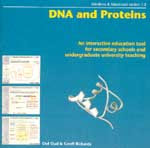
An Interactive Education Tool for Secondary Schools and Undergraduate University Teaching
Arthropods of Economic Importance Agromyzidae of the World

The Agromyzidae (mining flies) are a highly diverse dipteran family of exclusively phytophagous species. The world fauna consists of about 2,750 species. Of these, some 110 species are known to occur on cultivated crops. A number of species are of particular importance, especially Liriomyza and Ophiomya.
Chironomidae Larvae Key to the Higher Taxa and Species of the Lowlands of Northwestern Europe
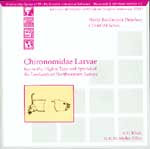
The Chironomidae form a cosmopolitan family of small nematocerous flies represented by some 1,300 species in the West Palaearctic Region. Chironomid larvae are widely distributed and the vast majority have aquatic juvenile stages which, on average, comprise one third of the invertebrate species in freshwater habitats. This usual abundance, and the fact that a number of species are pollution-tolerant, make chironomidae ideal indicator species in monitoring the quality of surface waters.
Flora Malesiana: Orchids of the Philippines Volume 1

The Philippines have a unique and rich orchid flora of almost 1000 species, of which about 74% are found nowhere else in the world.
Birds of Europe 'The handy birding tool'

Compiled by European ornithologists, Birds of Europe is a comprehensive source of information on 447 bird species. Detailed descriptions, full colour illustrations, sound recordings of birdcalls, pictures of eggs, video clips, and interactive maps depicting the summer, year-round and winter distribution.
Interactive Flora of the British Isles A Digital Encyclopedia
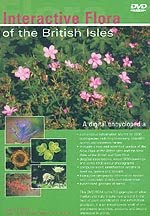
An encyclopaedic work, compiled from authoritative sources, and presenting an overview of the entire flora of the British Isles. It encompasses more than 3,500 taxa and includes all native and naturalized plants, all crop plants and all recurrent casuals.